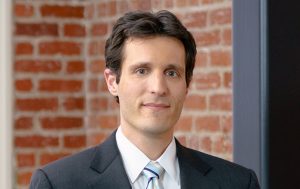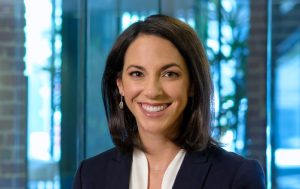

Keker Van Nest & Peters LLP partners helped Google and Netflix beat major patent litigation in the past year, while representing OpenAI and other tech companies in precedent-setting IP cases, and fostering a strong pro bono practice, earning the boutique firm a spot on the list of Law360 2026 California Powerhouses.
Managing partner R. James Slaughter, who has been at the firm for over 25 years, told Law360 that Keker's diverse legal teams excel at working together to solve hard problems for their clients where there's no standard playbook. Keker is known for applying old law to new technologies, and it distinguishes itself from other firms by tackling thorny legal issues when the stakes are high and the path forward isn't obvious, Slaughter said.
"That's when we're at our best," he said. "That's where we really thrive, and that's what we really love doing."
Since the law firm was founded in San Francisco in 1978, its headcount has grown to 133 attorneys, including renowned trial attorney Robert Van Nest and 49 other partners, who work from its San Francisco office.
Although the firm only has a single office, its reach is global, with Keker attorneys representing clients in jurisdictions around the world. Its notable alumni include U.S. District Judge Jon S. Tigar in California's Northern District and California Attorney General Rob Bonta.
Over the years, Slaughter said, Keker has intentionally avoided chasing growth and has instead focused on growing organically while establishing a reputation for successfully tackling novel legal issues posed by cutting-edge technologies.
Last year, the firm did just that, defending major tech clients, including Cerebras Systems Inc., Nvidia Corp., Perplexity AI Inc. and Runway AI Inc., as well as OpenAI in landmark copyright litigation that will likely shape the legal rules for artificial intelligence large language models going forward, according to Slaughter.
Keker successfully centralized 16 cases against OpenAI in the Southern District of New York, where the parties are in the middle of summary judgment briefing. The firm is also defending Google LLC in a first-of-its-kind suit claiming that an AI-generated voice unlawfully mimics a public figure, which raises novel legal questions about how right-of-publicity law applies to generative AI.
"There's no playbook for these cases; we are in uncharted territory," said partner Michelle Ybarra, who has been at Keker for over a decade.
Ybarra noted that Keker is also representing Meta Platforms Inc. in patent litigation involving AI-powered voice technologies used in its smart glasses, and last year, the firm helped Google score a huge win beating 6-year-old patent litigation, which was "a really long slog for the team."
In that case, Keker's legal team invalidated multiple patent claims through inter partes review proceedings, and in April, weeks before trial, the court granted summary judgment for Google, invalidating the sole remaining patent claim for being abstract.
In a separate patent case, Keker in May successfully convinced an en banc Federal Circuit to vacate a $20 million patent damages award against Google over its Nest thermostats. The case was the first en banc Federal Circuit rehearing on a patent damages issue in nearly 30 years, and Keker helped convince the panel to issue a precedential ruling limiting speculative damages theories regularly lobbed against tech companies, according to Keker.
Similarly, last year, Keker helped Netflix Inc. score a victory after five years of litigating Broadcom Corp.'s patent claims, which sought billions of dollars in damages across 17 asserted patents. Keker successfully invalidated 13 patents, and last year, the firm won a critical summary judgment ruling, invalidating a patent that accounted for roughly 85% of Broadcom's damages claims. Keker is defending the outcome on appeal.
Ybarra said Keker's patent team is as strong as ever, and she anticipates an uptick in patent litigation in the coming year, because the U.S. Patent and Trademark Office has granted fewer discretionary denials, like inter partes reviews.
Keker partner Ben Berkowitz told Law360 the firm has also had significant success in the past year in winning complex privacy cases that involved internet tracking, voice AI and data security.
For instance, last year, Keker secured arbitration and dismissal victories for cloud communications platform Twilio Inc. in healthcare privacy litigation claiming data was illegally scraped through technology embedded on healthcare websites.
The firm also represents LinkedIn Corp. in multiple class actions involving novel claims under the Video Privacy Protection Act and state privacy laws. In one of those cases, in November 2025, the plaintiffs agreed to voluntarily drop their class claims against LinkedIn.
Berkowitz noted that data shows there has recently been an explosion in regulatory actions and class action filings involving internet privacy and AI, which tend to raise novel legal issues and play to the firm's strengths.
"I think what distinguishes our practices in these cases is that we bring a trial-ready mentality to these technology disputes," he said. "We use small teams, but a lot of these cases involve enormous stakes and enormous consequences. The small teams make sure the lawyers are deeply immersed in the facts, and that is really our advantage."
Berkowitz attributes the firm's recent privacy litigation successes to its deep bench and rising stars Matan Shacham and Christina Lee, who both have an exceptional ability to take complex privacy cases and make them easy for judges and juries to understand.
In addition to victories for its tech clients, Keker has also scored significant wins on behalf of major clients in other industries in the past year.
Partner Eric H. MacMichael recalled working alongside Nicholas Goldberg, whom MacMichael praised as an expert in antitrust law, in representing the Pac-12 in a high-stakes college athletics antitrust case, which recently settled.
Amid the unprecedented realignment of college athletics, Keker represented the Pac-12 in its antitrust challenge to "poaching penalties" imposed by the Mountain West Conference. After nearly two years of litigation, the case recently settled, and MacMichael anticipates seeing more antitrust suits in the future challenging efforts to restrict athletes' mobility.
"I think there is this fairly predictable trend where people are trying to arrest the mobility and stop it, and I think logically you're going to see challenges to that," he said.
Last year, Keker also represented Coachella Valley developer John Wessman in a high-profile bribery and conspiracy case that resulted in his June 2025 acquittal, and the firm successfully represented San Mateo County, California, before the trial court in the Golden State's first contested removal proceedings against an elected sheriff. Keker is now defending the sheriff's removal on appeal.
Although 2025 was a big year for the firm, Keker doesn't appear to be slowing down anytime soon. Slaughter noted the demand in the San Francisco Bay Area right now is huge, particularly among clients seeking counsel on legal issues involving AI technology, and he expects that trend to continue.
"AI is at the top of everyone's list," he said.
Keker is also currently representing billionaire Justin Sun in his federal lawsuit against World Liberty Financial, the crypto company founded by President Donald Trump's sons, as well as human resources service provider Rippling in its corporate espionage litigation against competitor Deel Inc., which is playing out in courts in California and Ireland.
In addition to commercial cases, in the past year, Keker attorneys have taken on at least a dozen pro bono cases, challenging mass deportation efforts, warrantless immigration enforcement, loyalty screening in federal hiring, restrictions on transgender healthcare and attacks on collective bargaining rights.
The firm has scored major victories in those cases, helping secure injunctions limiting Border Patrol operations in California's Central Valley, challenging U.S. Immigration and Customs Enforcement redetention policies targeting asylum seekers and obtaining court-ordered reforms at a California ICE detention facility.
MacMichael praised his colleague, Keker partner Erin E. Meyer, for being a "quintessential Keker lawyer" who juggles representing corporate clients and pro bono clients.
Slaughter noted that Keker attorneys treat pro bono clients the same as paying clients, and the firm encourages its lawyers to take on pro bono work.
He added that the firm also distinguishes itself from competitors because almost all of its partners started as associates and have stayed with the firm over the years.
"We want them to grow up here," he said. "I think every single partner here was an associate, and that's a value. We trained together. We have a culture together. That is the Keker way."
–Editing by Kristen Becker.
Reprinted with permission from Law360. All rights reserved. For a reprint of this article, please contact reprints@law360.com.