

John Keker’s path from United States Marine platoon leader in the jungles of Vietnam to lead prosecutor in Lt. Col. Oliver North’s Iran-Contra trial ran through the same sense of duty: institutions matter, rules matter, and the mission is bigger than the person carrying it out.
The founder of Keker, Van Nest & Peters nearly lost his life leading Marines near Vietnam’s demilitarized zone before building a career as one of the nation’s best-known trial lawyers. Decades later, he says the same combat lessons that shaped his view of leadership also helped explain why he volunteered for Independent Counsel Lawrence Walsh’s prosecution team out of what he calls “outrage.”
“The idea that people from within the White House, working covertly with people from the CIA, would just completely ignore one branch of government because they felt strongly about something was about as threatening as anything I’d heard of to the idea behind American democracy,” he says.
Keker’s sense of public service began at Princeton, where an NROTC scholarship led to his commission as a Marine second lieutenant in 1965. He graduated first among roughly 400 lieutenants at The Basic School in Quantico, Virginia, and, despite having his choice of assignments, said Marine training left him with one goal: “all I wanted to be was an infantry platoon leader in a war zone.”
He married that September, drove a Volkswagen into Mexico, departed from Camp Pendleton, then spent nearly a month at sea before additional training in Okinawa. His unit later became part of the special landing force off Vietnam’s coast, deploying by helicopter when fighting intensified.
During Operation Hastings, the Marines pushed toward the demilitarized zone and landed atop a North Vietnamese Army division headquarters. Keker arrived in Vietnam in early 1966 leading about 60 Marines — three rifle squads and two weapons squads — and lasted less than eight months before he was wounded. Over several days of fighting, his elbow was shattered, and about half of his platoon was killed or wounded. He underwent surgeries in Phu Bai, Da Nang and, ultimately, at Bethesda Naval Hospital near the Maryland high school he had attended. His injuries forced his medical retirement from the Marine Corps.
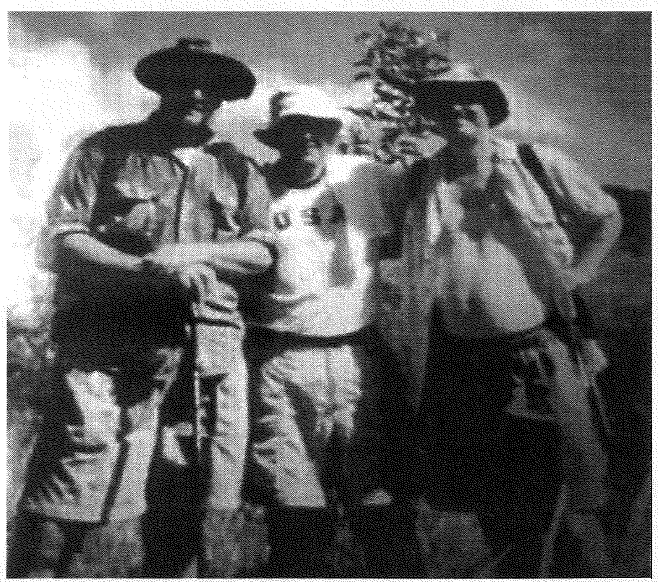
(Photo: Keker on left, his brother Jerry on the right, who enlisted in the Marines in 1966 while John Keker was still in the hospital, and JD Murray, 2nd platoon CO ( Keker was 1st platoon) who won the Navy Cross in a battle after Keker was wounded.)
“Military intelligence is to intelligence what military music is to music,” he says of the landing.
Years later, the same view of duty and institutional trust drew him into the Iran-Contra prosecution.
North’s 1989 trial made Keker a national figure, as millions of Americans watched nightly news clips—based on courtroom artists’ sketches, since cameras were (and are) barred from federal courts—showing the former Marine prosecutor confronting the Marine lieutenant colonel over a scheme to divert proceeds from arms sales to Iran to support the Contra rebellion in Nicaragua.
Jurors convicted North on three of the 12 counts against him, although the convictions were later overturned.
Walsh filed the case in 1988, two years after nationally televised congressional hearings, charging North and three others—including former national security adviser John Poindexter—with conspiracy.
After the Reagan White House refused to produce what it said was classified evidence, the cases were separated and prosecutors abandoned the central conspiracy allegations.
The trial before the late U.S. District Judge Gerhard Gesell was constrained from the outset by classified evidence disputes.
Across the courtroom stood defense attorney Brendan Sullivan of Williams & Connolly. Keker says, however, that his greater challenge was confronting the conduct of North and the officials above him.
The remaining defendants met different outcomes. Poindexter was convicted of lying to Congress and destroying documents. Robert McFarlane, who served as national security adviser before Poindexter, pleaded guilty to misdemeanor charges and received probation. Keker says he never expected North to go to prison. For him, the case was always about principle.
The mission-first approach Keker describes also shaped the culture of Keker, Van Nest & Peters.
Keker traces much of the firm’s culture to what he learned in combat and later connected to themes in “Lessons from the Hanoi Hilton,” by Peter Fretwell and Taylor Baldwin Kiland. The lesson he took from both was that an organization lasts when its purpose is clear enough to survive changes in leadership.
At the firm, he says, that has meant giving lawyers real responsibility early, encouraging candor and second chances, and accepting that meaningful work requires the willingness to risk failure—part of what he calls the “high price of success.”
The philosophy helped build a 140-lawyer litigation firm that has represented some of the nation’s largest corporations in high-stakes disputes while also pursuing prominent immigrant rights, civil rights and environmental matters.
For Keker, the same arc returns to the courtroom, which remains the profession’s defining institution.
“Trials are going to be with us forever and the world would be a worse place if every dispute was mediated, arbitrated or settled,” he says. “Trials are both fun for the lawyers and important for our society to properly decide things.”
Reprinted with permission from the Daily Journal. ©2026 Daily Journal Corporation. All rights reserved. Reprinted by ReprintPros 949-702-5390.