
San Francisco, Calif. — U.S. District Judge Maxine Chesney has ordered that U.S. Immigration and Customs Enforcement and the Department of Homeland Security must provide competent, consistent, and effective medical care to people detained in the California City Detention Facility, and she required an external monitor to be appointed to ensure that medical care meets constitutional requirements. Judge Chesney also ordered ICE to provide detained individuals with temperature-appropriate clothing and blankets, and to ensure timely and confidential access to legal counsel, both in person and by telephone. The decision comes in Gomez Ruiz, et al. v. ICE, filed in November by Keker, Van Nest & Peters, the Prison Law Office, the ACLU National Prison Project, and the California Collaborative for Immigrant Justice.
“The government wanted to grind the wheels of justice to a halt and continue its horrifying medical neglect and denial of fundamental needs like warm clothes and blankets, and meaningful access to attorneys to the more than one thousand souls languishing at this facility,” said Steven Ragland, Keker partner representing the plaintiffs. “We are incredibly grateful that the Court appreciated the immediate, irreparable harm individuals at California City face and ordered meaningful relief.”
Judge Chesney provisionally certified the more than 1,000-member class, which argues that the facility failed to provide for their basic human needs—adequate clothing, basic medical care, conditions of confinement consistent with civil, rather than criminal, detention, disability accommodations, and access to lawyers. Judge Chesney has also ordered the appointment of a monitor to ensure delivery of medical care.
“The appointment of a monitor is hugely important because we have already, in this case, seen ICE violate a court order to provide one very sick man with appropriate medical care,” said Cody Harris, Keker partner representing the plaintiffs. “Most of the people held in California City have no criminal record whatsoever, and yet the government subjects them to conditions harsher than those in a maximum security prison. We will continue fighting to improve the conditions at California City until they comply with ICE’s constitutional obligations.”
Plaintiffs provided voluminous evidence showing that people detained in California City experience:
- Very cold temperatures and inadequate clothing. Those who cannot afford to buy sweatshirts from the exorbitantly priced commissary suffer in the cold.
- Heavy glass separates detainees from their visitors; they cannot touch or hug their children.
- The facility sharply limits access to lawyers.
- Essential medications for serious conditions (heart disease, diabetes, and asthma) are not available on arrival.
- When medications are reordered, delivery is interrupted or stopped arbitrarily.
- Requests for medical attention go unanswered for weeks.
- Medical care is poor; providers fail to document exams, do not address abnormal lab results, and fail to order necessary treatment in a timely manner.
- People with disabilities are denied basic accommodations, such as sign language interpreters and wheelchairs.
- The facility is structurally inaccessible for people with mobility disabilities.
- The government fails to identify or accommodate people’s disability needs.
The detention facility, owned and operated by the for-profit prison company CoreCivic, is located east of Bakersfield in the Mojave Desert and was formerly a federal and state correctional facility. The case is Gomez Ruiz v. U.S. Immigration and Customs Enforcement, 3:25-cv-09757, in the U.S. District Court for the Northern District of California. You can read the order here.
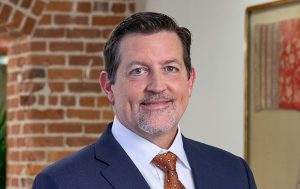
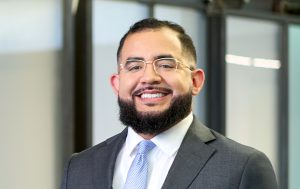
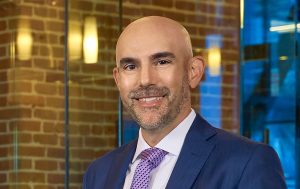
The Keker, Van Nest & Peters team representing the plaintiffs includes: Steven Ragland, Cody Harris, Carlos Martinez, and Lisa Lu.
The Vital Role of Private Lawyers
The case is one of several that Keker, Van Nest & Peters has taken up since the Trump administration targeted private law firms last year with executive orders, including ordering the Department of Justice to seek sanctions against lawyers who challenge the administration’s immigration and election enforcement. Keker publicly opposed those orders and has taken pro bono cases that challenge the administration’s most aggressive and constitutionally questionable immigration enforcement practices, including the following litigation.
Garro Pinchi v. Noem – This class action challenging ICE’s policy of re-arresting and re-detaining asylum seekers who had been lawfully released and were complying with the terms of their proceedings. In December 2025, a California federal court blocked the policy, and effectively halted ICE operations in San Francisco. It marked one of the first judicial checks on the administration’s attempt to re-detain asylum seekers and expedite deportations en masse.
CEDC v. Bessent – Taxpayer and immigrant advocates sued the government to halt ICE from accessing protected taxpayer data. On Thursday, Feb. 5, a Massachusetts federal court issued an injunction prohibiting ICE, DHS, Secretary Kristi Noem, and all immigration agents from using or even viewing the protected taxpayer information they had already illegally received. The relief is rare and indicates how serious the privacy violations are.
United Farm Workers v. Noem – Filed in February on behalf of United Farm Workers, the case is the first in the nation to challenge the Border Patrol’s aggressive enforcement operations in interior communities, in this case a January 2025 operation in Kern County, California, roughly 400 miles from their El Centro border station. In April 2025, a California federal court granted a preliminary injunction barring Border Patrol from conducting suspicionless stops or warrantless arrests in the district. The court also ordered the agency to document all enforcement encounters and to provide guidance and training to ensure compliance with the Fourth Amendment. The injunction applies district-wide, protects certified classes of affected residents, and remains in effect.
About Keker, Van Nest & Peters
For more than 45 years, Keker, Van Nest & Peters has litigated complex, high-stakes civil and criminal cases throughout the nation. The firm takes the cases where companies, products, and careers are riding on the result. Our clients are high-profile individuals, as well as some of the world’s most successful companies, including Dexcom, Genentech, Google, Instacart, Lyft, Major League Baseball, Meta, Netflix, and Qualcomm. The firm’s areas of expertise include intellectual property, professional liability, class actions, general contract and commercial litigation, antitrust, white collar, and appellate. Our firm has a long and proud tradition of providing pro bono representation, ranging from high-impact civil rights litigation impacting communities to habeas corpus, criminal, immigration, and asylum matters on behalf of individuals.
Learn more about our Pro Bono services.